
Correct Motorcycle Tyre Pressure: The Complete Guide
What's the right tyre pressure for your motorcycle? Learn the correct psi (and bar), why you must check cold, and how to adjust for two-up or loaded riding.
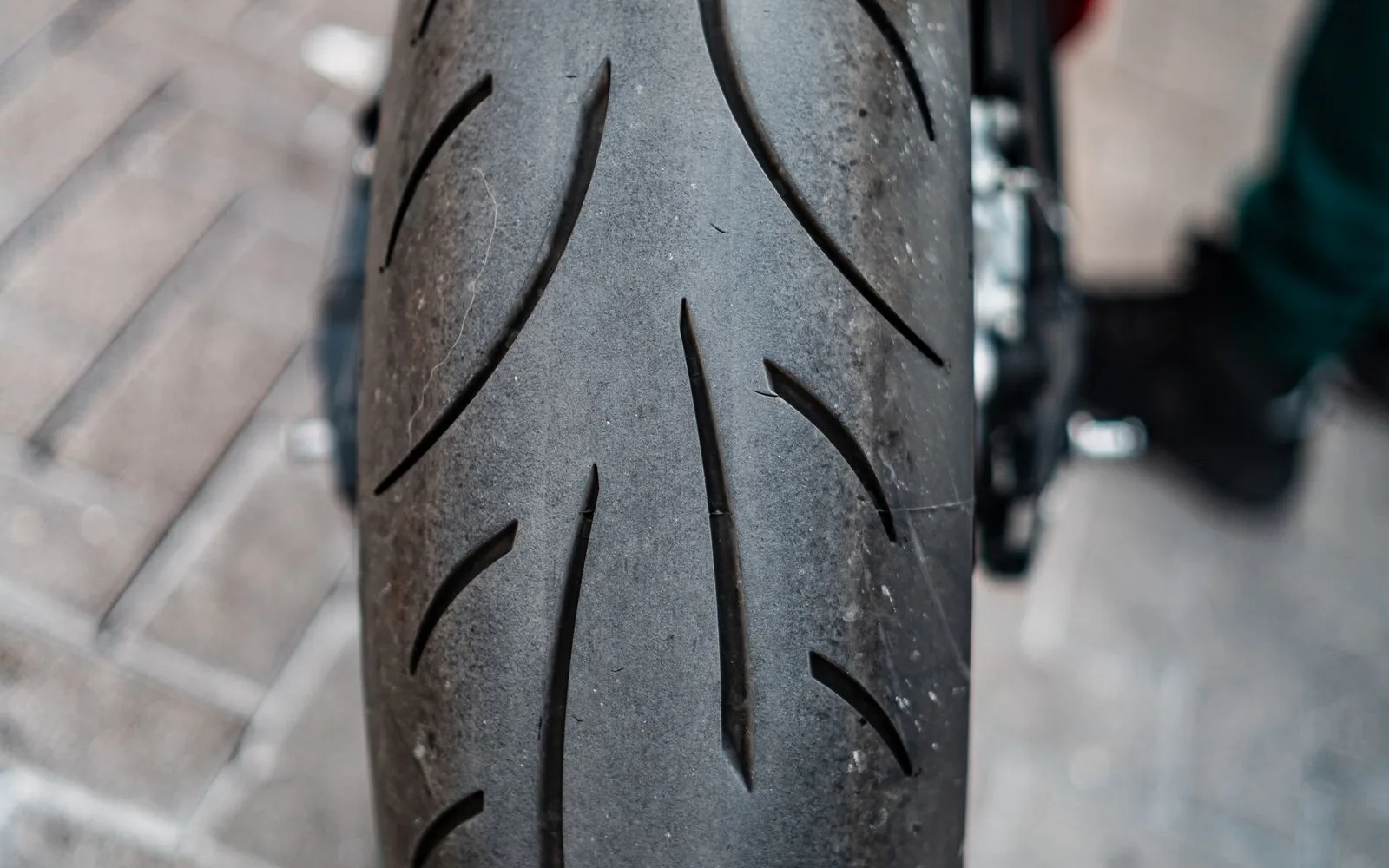
Tyre pressure is the cheapest, fastest piece of motorcycle maintenance there is — and one of the most neglected. The right pressure gives you grip, even wear and good fuel economy; the wrong pressure quietly costs you all three. Best of all, checking it takes about a minute and a basic gauge.
In short
- Typical range: roughly 28–42 psi (~2.0–2.9 bar), but bike-dependent
- Find your figures: owner's manual or the swingarm/chain-guard sticker
- Always check: cold — before riding, not after
- How often: at least monthly, and before every long ride
- Two-up or loaded: raise the rear (check the manual for the figure)
What is the correct tyre pressure for my motorcycle?
There's no universal number — it depends entirely on your bike. Typical motorcycle pressures sit somewhere around 28–42 psi (roughly 2.0–2.9 bar), but you must use the values set for your machine. Check the owner's manual or the sticker on the swingarm or chain guard. Don't use the number moulded into the tyre wall.
That tyre-wall figure is the tyre's maximum pressure, not the recommended one — running to it usually leaves the tyre over-inflated. The manufacturer balances comfort, grip and wear for your specific bike and tyre size, so their figure is the one to trust. Front and rear are often different, so set each one separately.
Should I check tyre pressure cold or hot?
Always check cold. That means before you've ridden, or after the bike has sat for at least a few hours. Riding heats the air inside the tyre and pushes the reading up, so a hot check shows a falsely high number. Recommended pressures are quoted for cold tyres, so that's when to measure and top up.
If you've only realised the tyres are low after a ride, you can still add air — but remember the warm reading is inflated by a couple of psi, so don't let a hot tyre fool you into under-inflating. For an accurate set-up, wait until everything has cooled and check again.
Never deflate a hot tyre to "correct" it
A tyre warmed by riding reads higher than its cold pressure — that's normal. Letting air out to hit the recommended figure while hot leaves it dangerously under-inflated once it cools. Always set pressures cold.
How does pressure change for two-up or loaded riding?
When you carry a pillion, luggage or both, the recommended rear pressure usually goes up to support the extra weight. Many bikes list a separate "two-up / loaded" figure in the manual or on the sticker. The front may stay the same or rise slightly — follow the bike's own table rather than guessing.
Running the standard solo pressure with a heavy load over-flexes the tyre, builds heat and accelerates wear. Set it for how you're actually riding that day. Here's how a typical set-up might differ — always confirm against your own bike's figures:
| Riding situation | Front | Rear |
|---|---|---|
| Solo | Manufacturer's solo figure | Manufacturer's solo figure |
| Two-up / loaded | Often unchanged or slightly higher | Raised — check the manual |
| After a long motorway run | Reads high (hot) — recheck cold | Reads high (hot) — recheck cold |
How often should I check my tyre pressure?
At least once a month, and always before a long ride. Tyres leak air slowly through the rubber and valve even without a puncture, so a monthly check catches that gradual loss. Add a quick check before any big trip — particularly when you're loaded or two-up — and you'll never set off badly under-inflated.
Building it into a routine is easiest. Pressure naturally fits alongside the other quick visual jobs on your motorcycle maintenance schedule, so check it whenever you give the bike a once-over. A cheap, accurate gauge of your own beats relying on forecourt machines that are often worn out. Log your bike's own figures in the printable tyre pressure chart and keep it in the garage.
What happens if my tyres are under-inflated?
Under-inflation is the most common — and most damaging — pressure problem. A soft tyre flexes more, runs hotter and wears out faster, usually at the edges of the tread. It also reduces grip, makes the steering feel vague and heavy, and quietly worsens your fuel economy because the engine works harder to overcome the drag.
If you've noticed your economy slipping, soft tyres are one of the first things worth ruling out — it's a classic cause covered in our guide to motorcycle fuel consumption. The fix costs nothing but a minute with a gauge, so it's the simplest saving you can make.
Can the wrong pressure damage my tyres or affect handling?
Yes — both under- and over-inflation take a toll. Too little pressure overheats and wears the tyre at the shoulders, hurts grip and can lead to instability. Too much pressure shrinks the contact patch, wears the centre of the tread, and gives a harsh ride with less feel. Neither extreme is safe at speed.
Correct pressure keeps the contact patch the size it was designed to be, so the bike steers predictably and the tyre lasts. Like fresh oil and a clean chain, it's one of those small, regular jobs — much like staying on top of your oil change interval — that keeps everything working as it should.
Frequently asked questions
- What is the correct tyre pressure for my motorcycle?
- There's no single answer — it depends on your bike. Typical motorcycle pressures fall somewhere around 28–42 psi (roughly 2.0–2.9 bar), but you must use the figures for your machine. Check the owner's manual or the sticker on the swingarm or chain guard, not the number printed on the tyre wall.
- Should I check tyre pressure when the tyres are hot or cold?
- Always check cold, meaning before you've ridden or after the bike has sat for a few hours. Riding warms the air inside and raises the reading, so a hot check looks higher than the true figure. The manufacturer's recommended pressures are set for cold tyres, so that's when to measure and adjust.
- How often should I check my motorcycle's tyre pressure?
- Check at least once a month and always before a long ride. Tyres lose pressure slowly over time, even without a puncture, so monthly checks catch the gradual drop. A quick check before any big trip — especially if you're riding two-up or loaded — takes a minute and protects your grip, wear and fuel economy.