
Motorcycle Oil Change Interval: Miles vs Time
Mineral oil: every 2,000–3,000 miles. Full synthetic: 7,000–10,000. Or once a year, whichever comes first — the complete mileage-and-time guide.
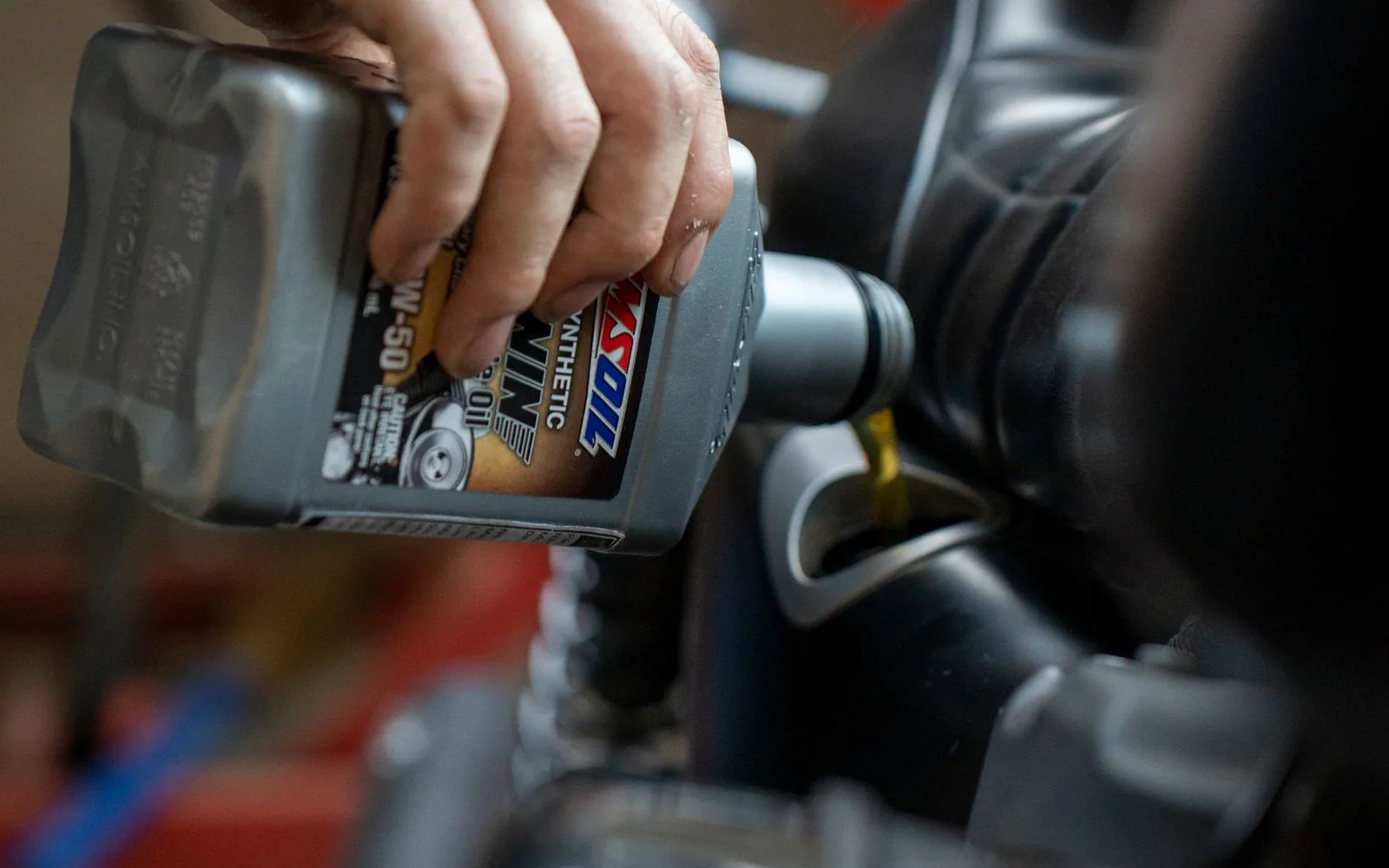
Oil is the cheapest insurance your engine will ever get. Get the interval right and your bike will reward you with a long, smooth life; leave it too long and you're inviting expensive wear. The trouble is that "how often" has two answers — one in miles and one in months — and you go by whichever comes first.
In short
- Mineral oil: every 2,000–3,000 miles (3,000–5,000 km)
- Semi-synthetic: every 4,000–6,000 miles (6,000–10,000 km)
- Full synthetic: every 7,000–10,000 miles (11,000–16,000 km)
- By time: at least once a year, whatever the mileage
- Always: follow your bike's service manual first
How often should I change motorcycle oil by mileage?
It depends on the oil type. As a general guide: mineral oil every 2,000–3,000 miles, semi-synthetic every 4,000–6,000 miles, and full synthetic every 7,000–10,000 miles. These are rules of thumb — your manufacturer's service manual always takes priority over any generic figure.
Synthetic oils resist heat and breakdown better than mineral, which is why they stretch further. Here's a quick reference (with km in brackets), but treat your manual as the final word:
| Oil type | Typical interval (miles) | Typical interval (km) | Best for |
|---|---|---|---|
| Mineral | 2,000–3,000 | 3,000–5,000 | Older / smaller bikes, running-in |
| Semi-synthetic | 4,000–6,000 | 6,000–10,000 | Everyday road riding |
| Full synthetic | 7,000–10,000 | 11,000–16,000 | Modern, high-revving and big-mile engines |
How often should I change oil by time if I barely ride?
Change it at least once a year, even if you've covered almost no miles. Oil ages on the calendar, not just the odometer. Most manufacturers state a time interval — commonly 12 months — alongside the mileage one, and you act on whichever arrives first.
This catches out a lot of weekend and seasonal riders. A bike that does 800 miles over a summer still needs fresh oil before the next season. Sitting still is, in some ways, harder on oil than steady riding.
Why does oil degrade when the bike is just sitting?
Three things attack oil at rest: condensation, fuel dilution and additive breakdown. Moisture from temperature swings mixes into the oil, tiny amounts of unburnt fuel seep past the rings, and the chemical additives that protect your engine slowly lose their punch. The result is acidic, thinned-out oil that no longer protects properly.
Don't skip the annual change
"I've hardly used it" is exactly when stale oil bites. Old oil turns acidic and sheds its protective additives, accelerating wear from the moment you start up. A £20 oil change is far cheaper than a rebuild.
Do I need motorcycle-specific oil?
In most cases, yes. Unlike a car, most motorcycles run the engine oil through a wet clutch and shared gearbox. That means you need oil rated to the JASO MA or MA2 standard, designed to give the clutch the friction it needs. Always check your manual for the exact grade and rating.
Many ordinary car oils carry "energy-conserving" friction modifiers that make a wet clutch slip — costing you drive and damaging the clutch. The viscosity grade (such as 10W-40) matters too, and the right one is printed in your owner's manual or near the filler cap.
What's the difference between mineral, semi and full synthetic?
Mineral oil is refined crude — cheap and fine for older or lower-stress engines, but it breaks down soonest. Semi-synthetic blends in synthetic base oils for better protection and longer life. Full synthetic is engineered for maximum heat resistance and the longest intervals, ideal for modern high-performance engines.
Going up a tier isn't wasted money on a hard-working bike — the longer interval and better protection can offset the higher price. But there's no point fitting £15-a-litre synthetic to a gentle commuter if mineral does the job; spend the difference on changing it on time instead.
How do I track when the next change is due?
Note two things at every change: the date and the odometer reading. Then set your next change at whichever target you hit first — the mileage limit for your oil type, or the 12-month mark. Keeping a simple running log removes all the guesswork.
This is exactly the kind of record that builds into a full motorcycle service history, which pays you back at resale time. And if your bike is over three years old, a well-kept log also makes MOT season far less stressful, because you already know everything is fresh. Log the date, the mileage and the oil you used — your future self (and any future buyer) will thank you. If you keep it on paper, the free printable maintenance log has a row ready for it.
Frequently asked questions
- How often should I change my motorcycle oil?
- As a rule of thumb, change mineral oil every 2,000–3,000 miles (3,000–5,000 km), and full synthetic every 7,000–10,000 miles (11,000–16,000 km). Crucially, change it at least once a year regardless of mileage, and always follow your bike's service manual first.
- Does motorcycle oil go off if I don't ride much?
- Yes. Oil degrades over time, not just with use. Condensation, fuel dilution and additive breakdown happen even when a bike sits in the garage. That's why most manufacturers specify a time limit — typically 12 months — alongside the mileage figure, whichever comes first.
- Can I use car oil in my motorcycle?
- Usually no. Most bikes share engine oil with the wet clutch and gearbox, so they need motorcycle-specific oil rated JASO MA/MA2. Many car oils contain friction modifiers that make a wet clutch slip. Always check your manual for the correct grade and JASO rating.