
Calculate Motorcycle Fuel Consumption: MPG & l/100km
MPG = miles ÷ gallons; l/100km = (litres × 100) ÷ km. Use the brim-to-brim method for an accurate figure — and catch engine problems early by tracking it.
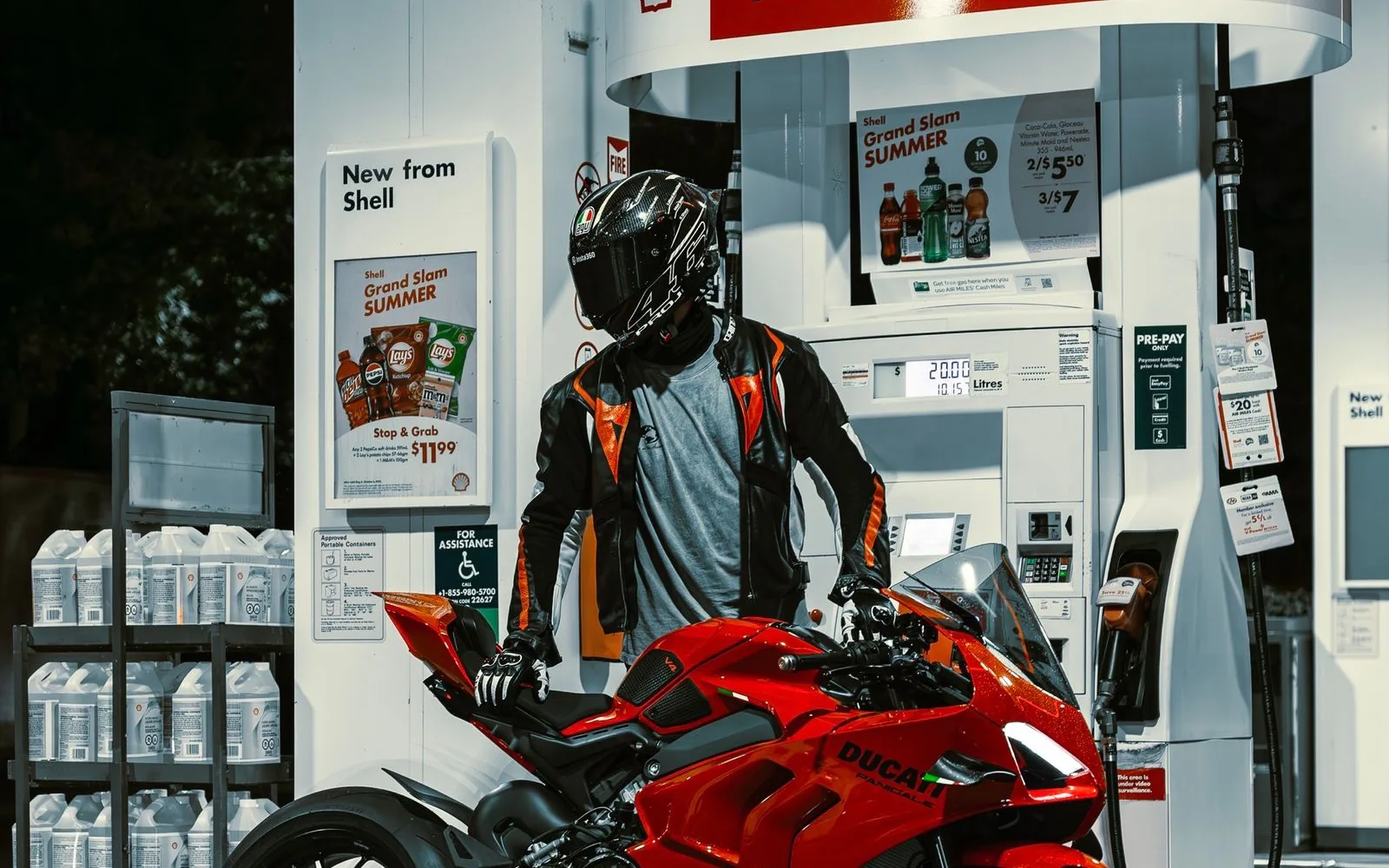
Your motorcycle's fuel consumption is one of the most useful numbers you can track — and one of the easiest to work out. It tells you what a journey really costs, and a sudden change is often the first sign that something's wrong. You don't need an app or a clever dashboard to measure it; a full tank and a trip meter will do.
In short
- MPG: miles ÷ gallons (UK imperial gallon = 4.546 litres)
- l/100km: (litres × 100) ÷ km
- Method: brim-to-brim — fill full, ride, refill full
- Reset: the trip meter at the first fill-up
- Watch for: a sudden drop, which often signals a fault
How do I calculate my motorcycle's MPG?
Use the brim-to-brim method. Fill the tank to the brim, reset your trip meter, then ride normally until you refuel. Brim the tank again and note the litres you added. Convert litres to imperial gallons by dividing by 4.546, then divide the miles ridden by the gallons. In short: MPG = miles ÷ gallons.
For example, if you covered 150 miles and added 13.6 litres, that's 13.6 ÷ 4.546 = 3 gallons, so 150 ÷ 3 = 50 MPG. The brim-to-brim part matters: filling to the same level each time is what makes the figure accurate, rather than a guess.
How do I work out l/100km instead?
If you think in litres and kilometres, the formula is l/100km = (litres × 100) ÷ km. Brim the tank, reset the trip, ride, then refill to the brim and note the litres added and the kilometres covered. Unlike MPG, a lower l/100km number means better economy — it's litres used per fixed distance.
For example, 5 litres used over 100 km is exactly 5.0 l/100km; 5 litres over 125 km works out at 4.0 l/100km. Same brim-to-brim discipline, just a different sum. Pick whichever unit you find easier and stick with it so your figures stay comparable.
| You want | Formula | Lower number means |
|---|---|---|
| MPG (UK) | miles ÷ gallons (litres ÷ 4.546 = gallons) | — (higher is better) |
| l/100km | (litres × 100) ÷ km | better economy |
| Imperial gallon | 1 gallon = 4.546 litres | — |
What is the brim-to-brim method and why use it?
Brim-to-brim means filling the tank to exactly the same full level at the start and end of the measurement. You fill to the brim, reset the trip, ride a full tank, then fill to the brim again — the fuel you add equals the fuel you used. It's the most accurate way to measure real-world consumption.
A single splash-and-dash gives a noisy figure because pump cut-offs and tank angle vary. Measuring over a full tank, ideally averaged across several, irons out that noise and gives you a number you can trust.
Don't overfill chasing the brim
Forcing extra fuel past the cut-off can flood the evaporative system and spill petrol as the tank warms. Fill to the same sensible "full" each time — consistency matters far more than cramming in every last drop.
Why should I track fuel consumption at all?
Because it's a free health check for your bike. A steady MPG figure is reassuring; a sudden drop is an early warning. Low tyre pressures, a dirty air filter, a dragging brake or a dry, worn chain all quietly cost you fuel before they cause anything more obvious. Watching the number means you spot trouble early.
It also tells you the true cost of riding and helps you compare routes, riding styles or even a new exhaust honestly. Many of the things that hurt economy are the same items on your motorcycle maintenance schedule — so a dropping figure is often a nudge to check the basics.
What affects how much fuel my motorcycle uses?
Plenty of things: riding style and speed, tyre pressures, the air filter, chain condition, the weather, and how much stop-start town riding you do. Hard acceleration and high motorway speeds raise consumption sharply; gentle, steady riding lowers it. Cold weather and short trips also push the figure up.
Regular servicing keeps most of these in check. Fresh engine oil, the right tyre pressures and a clean, lubed chain all help — which is why economy and upkeep go hand in hand. Staying on top of your oil change interval and basic maintenance is the simplest way to keep fuel use where it should be.
How often should I record a reading?
Record a reading at every fill-up if you can — it only takes a moment to note the litres and the trip distance before you reset. Over several tankfuls you'll see a reliable average and quickly notice anything out of the ordinary. Even logging every second or third fill builds a useful picture.
The key is consistency: same brim-to-brim method, same unit, every time. Jot down the date, the distance and the litres, and your running average does the rest — turning a quick forecourt habit into a genuine early-warning system for your bike.
Frequently asked questions
- How do I calculate my motorcycle's MPG?
- Use the brim-to-brim method: fill the tank to the brim, reset the trip meter, ride normally, then refill to the brim and note the litres added. Convert litres to imperial gallons (divide by 4.546), then divide miles ridden by gallons. So MPG = miles ÷ gallons. That gives a real-world figure for that tankful.
- How do I work out fuel consumption in litres per 100km?
- Brim the tank, reset the trip, ride, then refill to the brim and note the litres added and the kilometres covered. The formula is l/100km = (litres × 100) ÷ km. A lower number means better economy. Doing it brim-to-brim over a full tank gives a far more accurate figure than a quick splash of fuel.
- Why is my motorcycle using more fuel than usual?
- A sudden drop in economy often points to something worth checking: low tyre pressures, a dirty air filter, a dragging brake, a worn or dry chain, or simply harder riding and cold weather. That's exactly why tracking consumption helps — an unexplained jump is an early warning that something needs attention.